What key issues should be noted when using Triazinamide in Pymetrozine production
Triazinamide is the core intermediate for synthesizing Pymetrozine, CAS No.: 136738-23-3. The quality, storage, feeding control and reaction parameter management of Triazinamide directly determine the yield, finished product purity and stable continuous production of Pymetrozine. Manufacturers must pay attention to the following key issues when applying Triazinamide in Pymetrozine production.
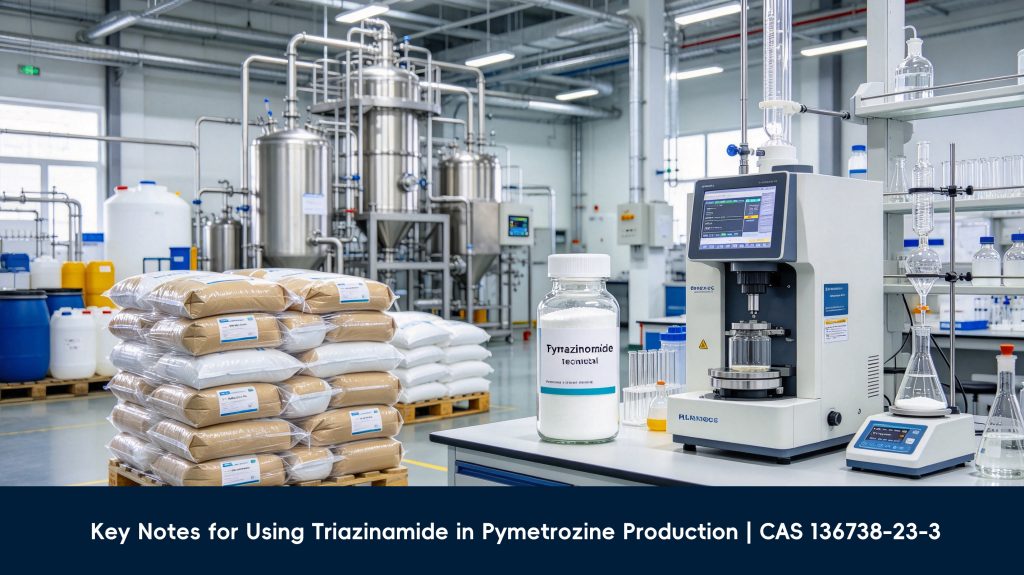
First, strictly control the raw material quality indicators of Triazinamide. The purity of Triazinamide is the primary factor affecting Pymetrozine HPLC purity. Impurities carried by unqualified Triazinamide will participate in side reactions during the synthesis process, generate difficult-to-remove by-products, reduce Pymetrozine technical content, and cause product failure in export registration. It is necessary to test Triazinamide’s appearance, moisture content, related substances and insoluble impurities before feeding. Any batch of Triazinamide with discoloration, caking or excessive impurity content should be rejected.
Second, control storage and handling stability of Triazinamide. Triazinamide is sensitive to humidity and high temperature. Long-term storage in a high-humidity warehouse will cause Triazinamide to degrade, and degraded Triazinamide will trigger more side reactions in the Pymetrozine synthesis system. Keep Triazinamide sealed in dry, cool and ventilated warehouses, avoid direct sunlight and moisture infiltration. During feeding operations, take dust prevention measures to avoid Triazinamide powder leakage and cross-contamination.
Third, optimize reaction temperature and feeding sequence when Triazinamide reacts to produce Pymetrozine. Excessively high reaction temperature accelerates the decomposition of Triazinamide and increases by-product generation. Too low temperature leads to incomplete conversion of Triazinamide and low Pymetrozine yield. Operators should add Triazinamide slowly according to the predefined feeding rate instead of one-time bulk feeding, to prevent local over-concentration and runaway side reactions.
Fourth, manage wastewater, waste residue and safety risks in the workshop. The residual mother liquor containing Triazinamide from Pymetrozine production cannot be discharged directly. Treat waste liquid and solid waste following environmental protection specifications. Workers shall wear protective gloves, goggles and dust masks when contacting Triazinamide to prevent skin and respiratory irritation.
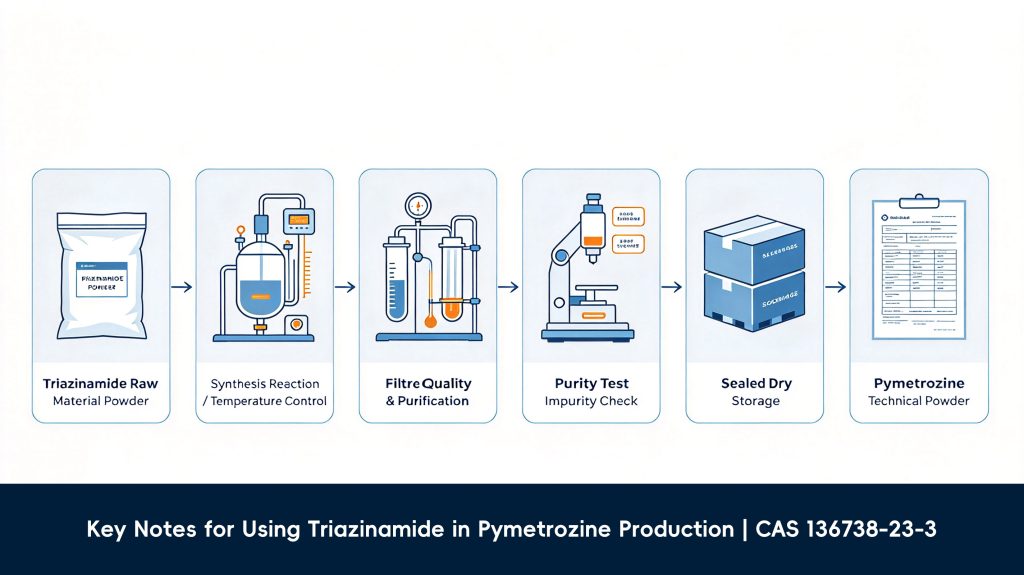
Fifth, implement batch traceability of Triazinamide. Record each batch number, test report, storage duration and consumption amount of Triazinamide used for Pymetrozine production. Once Pymetrozine quality abnormality occurs, manufacturers can quickly trace back to the raw material batch of Triazinamide and locate the root cause.