Oxidant-Based Capsulated Gel Breaker: Introduction & Gel Breaking Mechanism
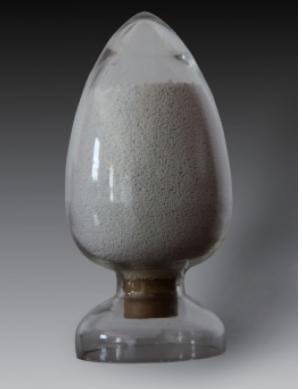
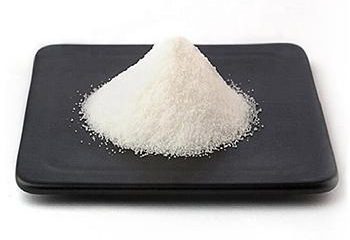
The oxidant-based capsulated gel breaker is a high-performance chemical additive specifically designed for hydraulic fracturing operations in oil and gas fields. It takes oxidants (mainly ammonium persulfate/APS, potassium persulfate/KPS) as the core capsule core and uses temperature-resistant polymer, resin or waxy composite materials as the capsule wall, realizing delayed release through encapsulation technology. This product effectively solves the problem of premature gel breaking of conventional oxidant gel breakers, ensuring the stability of fracturing fluid viscosity during pumping and sand-carrying, while achieving thorough gel breaking and flowback after fracturing, thereby protecting the reservoir and improving oil and gas recovery efficiency.
Key Features:
- Delayed Release: The capsule wall remains intact during pumping, and the oxidant is only released after reaching the target formation, avoiding premature viscosity reduction.
- Controllable Gel Breaking: The gel breaking time can be adjusted (1-24 hours) according to formation temperature, construction time and fracturing fluid type.
- High Efficiency: It can quickly reduce the viscosity of fracturing fluid to ≤5 mPa·s after release, ensuring smooth flowback.
- Low Reservoir Damage: The gel breaking residue is low (≤50 mg/L), which can effectively reduce the blockage of formation pores and fracture conductivity.
- Good Compatibility: It is compatible with common fracturing fluid additives such as clay stabilizers, bactericides and cleanup additives.
Application Scope:
- Low-temperature wells (60-80℃), medium-temperature wells (80-110℃) and high-temperature wells (110-150℃) in oil and gas fields.
- Fracturing operations of tight oil, shale gas and conventional oil and gas reservoirs.
- Fracturing fluid systems such as guar gum, hydroxypropyl guar gum, HPAM and slickwater.
The gel breaking process of the oxidant-based capsulated gel breaker is divided into three sequential stages: capsule wall rupture, oxidant release and oxidative chain scission, which is scientific and controllable.
2.1 Capsule Wall Rupture (Delayed Release Mechanism)
The capsule is composed of two parts: the core (oxidant) and the wall (polymer/resin/waxy material). The capsule wall acts as a barrier during the fracturing fluid pumping stage, isolating the oxidant from the fracturing fluid and preventing premature reaction.
The main trigger mechanisms for capsule wall rupture are temperature-triggered (the most mainstream), pressure-triggered and pH/hydration-triggered, among which temperature-triggered is the most widely used in field operations: when the capsule is transported to the target formation with the fracturing fluid, the capsule wall softens, melts or degrades under the action of formation temperature, and then ruptures, releasing the oxidant in the core into the fracturing fluid.
After the oxidant (ammonium persulfate/potassium persulfate) is released, it undergoes thermal decomposition under downhole temperature conditions to generate highly active sulfate radicals (SO₄⁻·), and the chemical reaction formula is as follows:
The sulfate radical has strong oxidizing properties, which is the core active substance for breaking the gel structure of the fracturing fluid.
2.3 Oxidative Chain Scission (Core Gel Breaking Process)
The thickener in the fracturing fluid (such as guar gum, cellulose, HPAM) is a long-chain polymer, which entangles with each other to form a three-dimensional network structure, making the fracturing fluid present high viscosity gel state.
The sulfate radical generated by the activation of the oxidant will non-selectively attack the chemical bonds (C-C bonds, glycosidic bonds, ether bonds) on the polymer molecular chain of the thickener, randomly cutting the long-chain molecules into small molecular fragments. As the network structure of the polymer is destroyed, the viscosity of the fracturing fluid drops sharply, and the high-viscosity gel is converted into a low-viscosity flowable liquid, thus completing the gel breaking process.
The capsule wall of the oxidant-based capsulated gel breaker ruptures under downhole high temperature and high pressure conditions, releasing persulfate. The persulfate generates highly oxidizing sulfate radicals through thermal decomposition, which randomly cut the polymer long chains in the fracturing fluid, destroy the gel network structure, and finally achieve viscosity reduction and gel breaking. This mechanism ensures the stability of the fracturing fluid during construction and the thoroughness of gel breaking after fracturing, which is an essential core additive for efficient and low-damage fracturing operations.