The Complete Guide to 4-Acetylamino-6-methyl-3-oxotriazine (Triazinamide)
1. Full Identification & Nomenclature
Core Registry Data
- Standard Short Name: Triazinamide / Pymetrozine Intermediate P4
- CAS Registry Number: 136738-23-3
- Full IUPAC Name: 4-Acetylamino-6-methyl-3-oxo-2,3,4,5-tetrahydro-1,2,4-triazine
- Systematic Alias: N-(6-methyl-3-oxo-2,5-dihydro-1,2,4-triazin-4(3H)-yl)acetamide
- Chinese Name: 4 – 乙酰氨基 – 6 – 甲基 – 3 – 氧代 – 2,3,4,5 – 四氢 – 1,2,4 – 三嗪
- HS Customs Code: 2933699099 (Triazine heterocyclic fine chemicals)
- EINECS: Unassigned
Molecular Coding (Copyable Text)
- Molecular Formula: C6H10N4O2
- Exact Molecular Weight: 170.169 g/mol
- SMILES: CC(=O)NN1CC(C)=NNC1=O
- InChI: 1S/C6H10N4O2/c1-4-3-10(9-5(2)11)6(12)8-7-4/h3H2,1-2H3,(H,8,12)(H,9,11)
- InChIKey: NCSCAWXVGUIUEY-UHFFFAOYSA-N
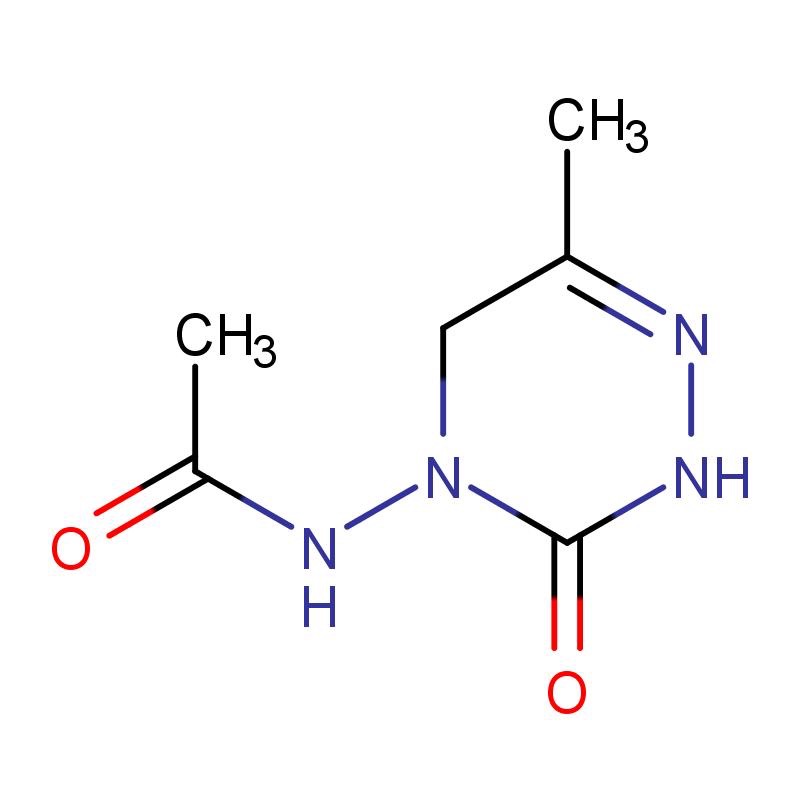
Triazinamide Molecular Structure
2. Molecular Structural Characteristics
- Heterocyclic Backbone: Saturated aliphatic 1,2,4-tetrahydrotriazine six-membered ring, non-aromatic, distinct from fully conjugated aromatic 1,3,5-triazine (melamine)
- Ring Substituent Distribution
- C6 position: Methyl group (-CH3)
- C3 position: Lactam carbonyl (C=O), forming cyclic amide structure
- N4 ring nitrogen: Acetylamino reactive side chain (-NH-COCH3)
- Structural Advantages
- Abundant hydrogen bond donors & acceptors (4 ring N, 2 carbonyl O, 2 amide NH)
- Low steric hindrance on N4 site, easy to conduct aldehyde condensation
- Flexible saturated ring without aromatic π-conjugation, mild reaction conditions required for derivatization
3. Complete Physical & Chemical Properties
Physical Index
表格
| Parameter | Standard Value | Supplementary Note |
|---|---|---|
| Appearance | White / off-white crystalline powder | Industrial purified solid |
| Melting Point | 218–224 °C | Decomposes immediately upon melting |
| Thermal Decomposition Threshold | ≥220 °C | Releases NH3, N2 and nitrogenous volatile organics |
| LogP (Partition Coefficient) | -0.708 | Strongly hydrophilic |
| Predicted Density | 1.43 g/cm³ | Computational simulation value |
| pKa | 11.22 | Weak acidity from lactam N-H |
| Hygroscopy | Low | No deliquescence under normal humidity |
| Solubility | Soluble in hot water, DMF, DMSO; slightly soluble in methanol; insoluble in ethers, alkanes | Polar solvent selective dissolution |
Core Chemical Reactivity
- Acidic HydrolysisCleaves terminal acetyl group to produce 4-amino-6-methyl-3-oxo-tetrahydrotriazine, the direct precursor for pymetrozine synthesis.
- Condensation & Reductive Amination (Industrial Core Reaction)Acetylamino N-H condenses with pyridine-3-carboxaldehyde to form Schiff base; subsequent catalytic reduction yields technical-grade pymetrozine insecticide.
- Alkaline DegradationStrong base with heating triggers ring-opening cleavage of the lactam structure.
- Salt FormationCombines with strong mineral acids (HCl, H2SO4) via ring N protonation to form water-soluble inorganic salts.
- Oxidation ResistanceStable under mild oxidation; high-temperature air or H2O2 oxidizes saturated ring into unsaturated triazinone impurities.
4. Industrial Synthetic Manufacturing Routes
Main Mass-Production Route (Global Standard Process)
- Cyclization Step: Methylthiosemicarbazide reacts with ethyl pyruvate to generate triazinamine crude intermediate
- Acetylation Step: Reaction with acetic anhydride / acetyl chloride under triethylamine catalysis at 40–60 °C
- Purification: Recrystallization with hot water to raise purity
- Post-treatment: Filtration + low-temperature vacuum drying to obtain finished crystalline powder
Lab Minor Route
Cyanamide + urea thermal cyclization followed by acetylation; low total yield, only for small laboratory trial batches, not suitable for large-scale industrial output.
5. Industrial Quality Control Specifications
- HPLC Purity
- Technical industrial grade: ≥99.0%
- High-purity fine intermediate grade: ≥99.5%
- Moisture Content: ≤0.3%
- Hot Water Insoluble Residue: ≤0.1%
- Heavy Metal Impurities (Pb, As, Cd): <10 ppm
- Residual Acetic Acid: ≤0.2%
6. Application Field Analysis
Dominant Application: Penultimate Intermediate of Pymetrozine Insecticide
Triazinamide is the mandatory upstream raw material for pymetrozine, a selective systemic agrochemical developed for piercing-sucking pest control:
- Target pests: Aphids, whiteflies, rice planthoppers, leafhoppers on grain, vegetable and cash crops
- Insecticidal mechanism: Blocks serotonin transmission in insect stylets, causing permanent feeding cessation
Secondary Research & Lab Applications
- Medicinal chemistry building block for nitrogen heterocyclic drug candidates
- Ligand precursor for metal coordination catalyst research
- Nitrogen-rich monomer for polyamide and COF (covalent organic framework) lab synthesis
7. Safety, Handling & Storage Guidelines
Hazard Profile
- Mild irritant to skin, eyes and respiratory tract; avoid dust inhalation and direct contact
- Thermal decomposition generates toxic ammonia and nitrogen oxide fumes
- Non-flammable solid, but accelerates combustion when mixed with strong oxidants
Personal Protection
Wear dust respirator, chemical-resistant gloves and safety goggles during weighing, feeding and synthesis operations.
Storage & Transportation
- Packaging: 25kg woven bags lined with PE inner film, sealed tightly
- Storage environment: Cool, dry, ventilated warehouse; segregate from oxidants, strong acids and food chemicals
- Transport classification: General industrial chemical, no dangerous goods label required; shield from rain and high temperature
Waste Disposal
Solid waste sent to dedicated chemical incinerators with tail gas absorption system; liquid wastewater neutralized before discharge complying with local environmental standards.
8. Market & Production Overview
- Global monthly industrial capacity: ~100 metric tons
- Bulk FOB pricing: ≥1000kg USD 4–6/kg; small batches (1–200kg) USD 35–40/kg
- Major manufacturers: Fine chemical factories in Jiangsu, Zhejiang and Shandong (China), supplying global pymetrozine manufacturers