Sodium Allyl Sulfonate
Comprehensive Introduction to Sodium Allyl Sulfonate
1. Overview
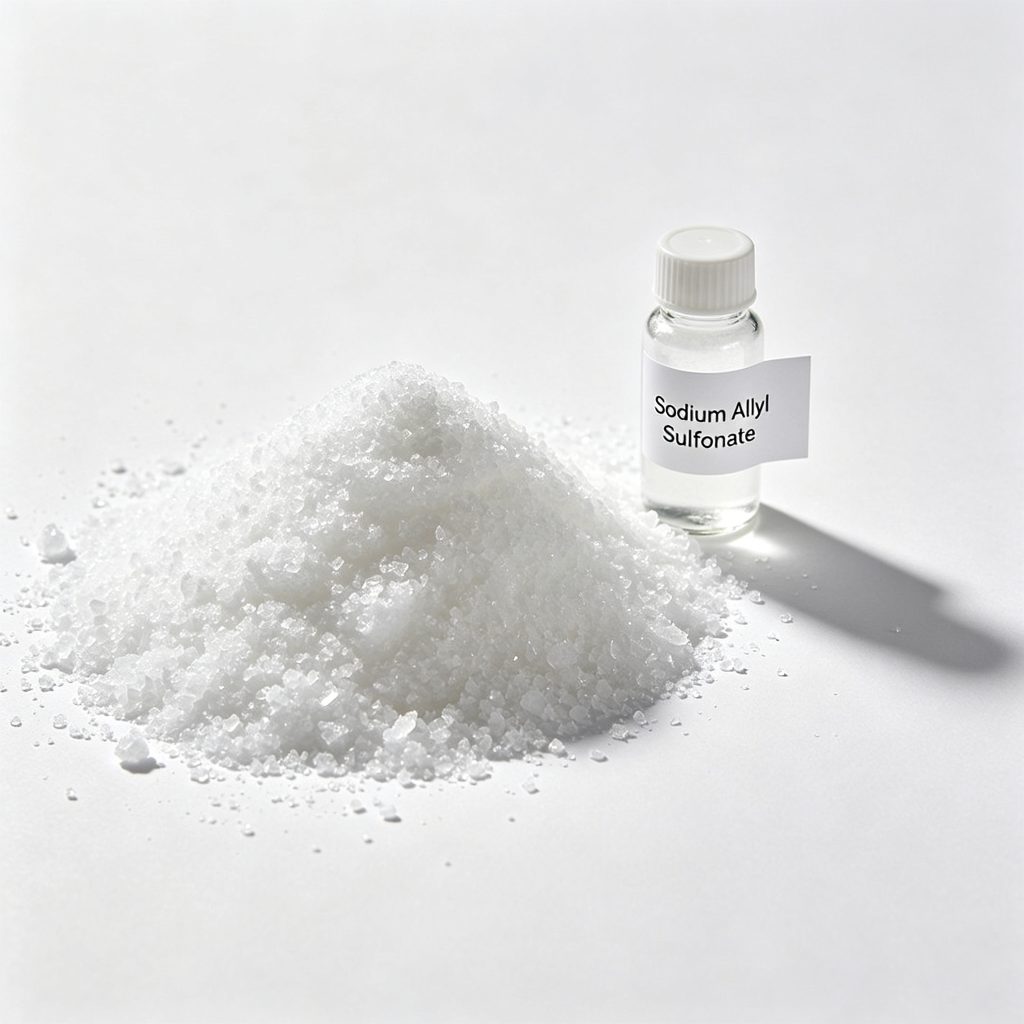
Sodium Allyl Sulfonate (SAS) , also known as Sodium 2-propene-1-sulfonate or Allylsulfonic Acid Sodium Salt, is an organosulfur compound widely utilized in industrial chemistry and polymer science. It functions primarily as a copolymerizable emulsifying agent and a additive for electroplating. The compound is valued for its dual functionality: a reactive vinyl group (C=C) allows for polymerization, while a sulfonate group (-SO₃Na) provides high solubility and ionic characteristics.
2. Chemical Profile
3. Synthesis and Reactivity
Sodium Allyl Sulfonate is synthesized via the sulfonation of allyl chloride or allyl alcohol, followed by neutralization with a sodium base.
Reactivity:
The molecule contains an electron-withdrawing sulfonate group adjacent to a double bond. This configuration makes the alpha (α) carbon-hydrogen bonds acidic, allowing deprotonation under basic conditions to form a stabilized carbanion. This property allows SAS to participate in nucleophilic substitution reactions, such as those used to create novel polysulfide polymers.
4. Applications
SAS is a critical intermediate in several industrial sectors:
4.1 Polymer Industry (Copolymerization)
SAS is used as a monomer to modify the properties of polymers. When copolymerized with monomers like acrylonitrile, it introduces sulfonate groups into the polymer chain.
- Dyeable Acrylic Fibers: It adds dye-receptive sites to synthetic fibers, improving color uptake.
- Superplasticizers: SAS-based copolymers are used in concrete to improve workability and reduce water content.
- Flocculants & Hydrogels: It enhances water solubility and ionic conductivity, making it effective for water treatment and absorbent materials.
4.2 Electroplating (Metal Finish)
SAS acts as a brightening agent and grain refiner, particularly in nickel and palladium plating baths.
- Mechanism: It adsorbs onto the metal surface during deposition, influencing grain size and morphology. This results in smoother, brighter, and more corrosion-resistant coatings.
4.3 Specialty Chemicals
Recent research highlights SAS as a precursor for high-sulfur-content polymers. Using a water-based synthesis with sodium polysulfides, SAS helps create materials (Poly-S-SAS) that act as powerful desiccants (absorbing up to 345% of their weight in water) or metal remediation agents (removing heavy metals from wastewater).
5. Safety and Handling
While generally stable, proper safety protocols are required when handling SAS powder due to potential irritation.
- Stability: Stable under normal conditions. Incompatible with strong oxidizing agents.
- Storage: Keep container tightly closed in a cool, dry place. Avoid dust formation. It is hygroscopic, so inert gas storage is recommended.
- Toxicity:
- Ecotoxicity: Should not be released into the environment without treatment.
6. Regulatory and Identification Information
- EINECS Number: 219-676-5.
- InChI Key: DIKJULDDNQFCJG-UHFFFAOYSA-M.
- Shipping: Generally not classified as hazardous for transport by DOT (Department of Transportation) in dry form, but aqueous solutions may have specific handling requirements.
Comprehensive Introduction Table of Sodium Allyl Sulfonate (SAS)
| Item | Detailed Information |
|---|---|
| Chemical Name | Sodium Allyl Sulfonate (SAS) |
| Molecular Formula | C3H5NaO3S |
| Molecular Weight | 144.12 g/mol |
| Structural Feature | Contains one reactive C=C allyl double bond and one anionic sulfonate group −SO3−Na+ |
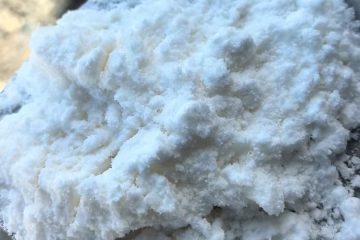
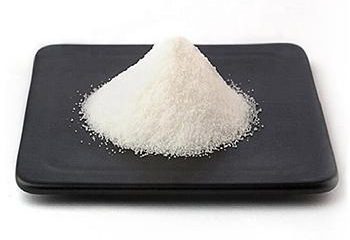
| Physical Appearance | White crystalline solid; transparent light yellow liquid (aqueous commercial solution) |
| Water Solubility | Highly soluble in water; insoluble in non-polar organic solvents |
| Self-Polymerization Tendency | Low homopolymerization activity; weaker self-reaction than acrylic monomers, easy copolymerization |
| pH Stability | Stable sulfonate anion across pH 2–12; no charge loss under acidic conditions |
| Key Functional Group Functions | 1. C=C double bond: Participates in free-radical copolymerization to graft sulfonate onto polymer backbones 2. −SO3−: Provides permanent hydrophilicity, electrostatic repulsion, metal ion chelation, salt tolerance |
| Common Co-Monomers | Acrylamide (AM), DAC, acrylic acid, methacrylic acid, acrylonitrile |
| Main Application Fields | 1. Anionic flocculants for high-salinity wastewater 2. Polycarboxylate superplasticizers for concrete 3. Water-soluble polymer dispersants 4. Antistatic modifiers for fiber & coating resin |
| Polymerization Methods | Aqueous solution polymerization, water-phase precipitation polymerization (no toxic organic solvent needed) |
| Thermal Stability | Solid decomposes above 210°C; aqueous solution stable at 60–90°C polymerization temperature |
| Biodegradability | Moderate biodegradation for monomer; SAS copolymers show better degradation than pure PAM |
| Toxicity & Eco-Safety | Low acute toxicity; non-carcinogenic; degradation product is harmless sulfate, no eutrophication risk |
| Storage Requirements | Sealed cool dry storage; avoid strong acid, strong oxidants and long-time high-temperature exposure |
| Core Advantage vs Carboxylate Monomers | Sulfonate group maintains ionic charge in high-salt/acid water; superior anti-scaling and dispersion performance |